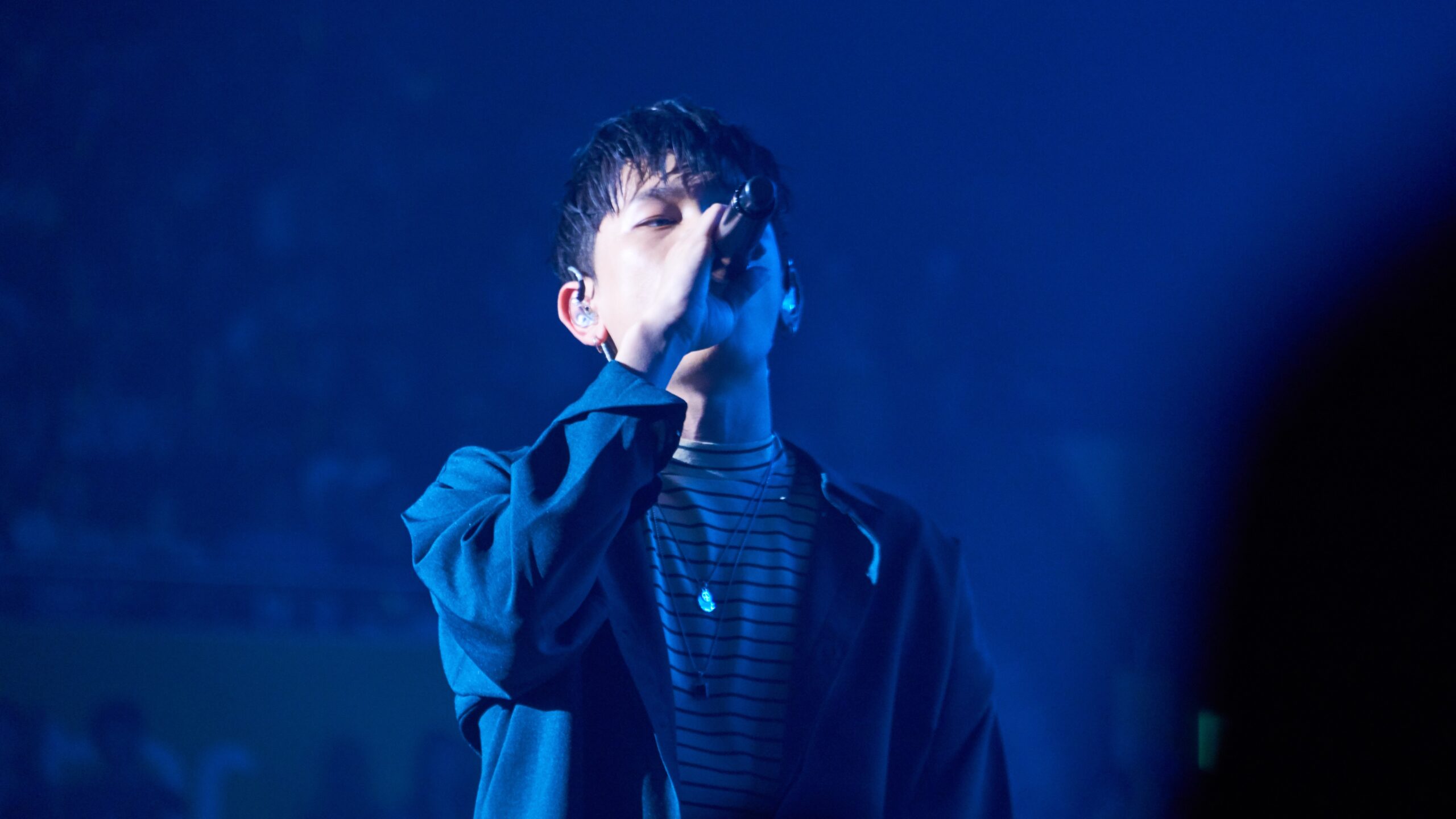

Crush and IU’s “seesaw” is about the awkwardness of love: two people can care about each other while struggling to move in step. Its Korean title, 삐그덕 (ppigeudeok), evokes a creaking sound. That gives the song a small, everyday imperfection that the English title alone may not immediately convey.
Released on October 21, 2026, the digital single pairs Crush with featured vocalist IU. Here is a Korean-language reading of the title, the reactions we could verify, and the music-video meaning Crush himself explained. Official release announcement.
What does 삐그덕 mean in Korean?
Think of something moving with a creak rather than sliding smoothly. A useful dictionary reference is the related Korean verb 삐걱하다, which the National Institute of Korean Language defines in terms of hard objects rubbing together and making a sound. Its entry lists 삐거덕하다 as the longer form. Korean–English dictionary.
STAR CUT’s reading: the title makes emotional awkwardness feel physical. Imagine wanting to say something affectionate, then choosing the wrong moment or becoming stiff with nerves. The attraction may be real even when the interaction feels clumsy.
The two titles offer different ways into the same idea. Seesaw suggests movement between two sides; 삐그덕 draws attention to how that movement feels and sounds. That distinction is useful when watching the video: notice the hesitation as well as the romantic gestures.
This reading fits Crush’s own account. In a label-distributed Q&A, he described the song as a playful treatment of mismatches between people in love, including their imperfect, unpolished moments. Crush’s October 21 Q&A.


What are Korean fans saying about Crush and IU?
The fan examples below are snapshots from specific posts and reporting.
Before release: the awkwardness became part of the joke. In an October 19 TheQoo teaser post, the writer interpreted Crush’s stiff reaction to IU’s approach as matching the title. The same writer was looking forward to hearing his love-song style alongside her voice. This was anticipation based on the teaser, not a review of the finished song.
After release: the vocal pairing drew praise. Star News reported on October 21 that YouTube commenters were praising the combination of their voices and the video’s visuals. Those comments were quoted by the outlet; STAR CUT did not independently sample the full YouTube comment section.
One Korean word helps explain that response: 음색 (eumsaek), meaning vocal tone or timbre. A comment about the two singers’ eumsaek working together concerns the character of their voices and how they blend. It is different from simply praising a high note or powerful delivery.
That gives English-speaking listeners a more specific question to explore: what changes when the second voice enters? Listen for phrasing, texture and the space each singer leaves for the other.
What does IU represent in the “seesaw” music video?
Crush’s explanation adds another layer. In the same Q&A, he said IU’s character represents sadness within him. He described a story about gradually facing an emotion he wanted to avoid, then finding comfort in accepting it as part of himself.
Our interpretation is that this gives the apparently romantic interaction an inward dimension: the difficult relationship can also be with an emotion. The title’s uneasy movement works on both levels. The symbolic role is Crush’s stated explanation; the connection between that role and the title is STAR CUT’s reading.
Who wrote “seesaw,” and where can you hear it?
P NATION’s official credits list Crush as lyricist, Crush and haventseenyou as composers, and haventseenyou and Crush as arrangers. Crush and IU are both credited for chorus vocals. IU is the featured vocalist; these credits do not list her as a songwriter.
The official English title is “seesaw”. Search for “Crush seesaw feat. IU” or copy “삐그덕 (Feat. 아이유)” to find the correct release. Use Crush’s official listening links or compare the video with the official live clip.
For another English guide to a recent Korean release, read our BABYMONSTER “DESERVE” explainer.
Reporting note: checked October 27, 2026. Release details and credits come from official sources. Artist intent is attributed to Crush’s Q&A; language interpretation is labeled as editorial analysis. The fan examples are limited and are not presented as a national consensus.